Postcards: Why Every Ride Deserves to Be Remembered
Dave · July 6, 2026
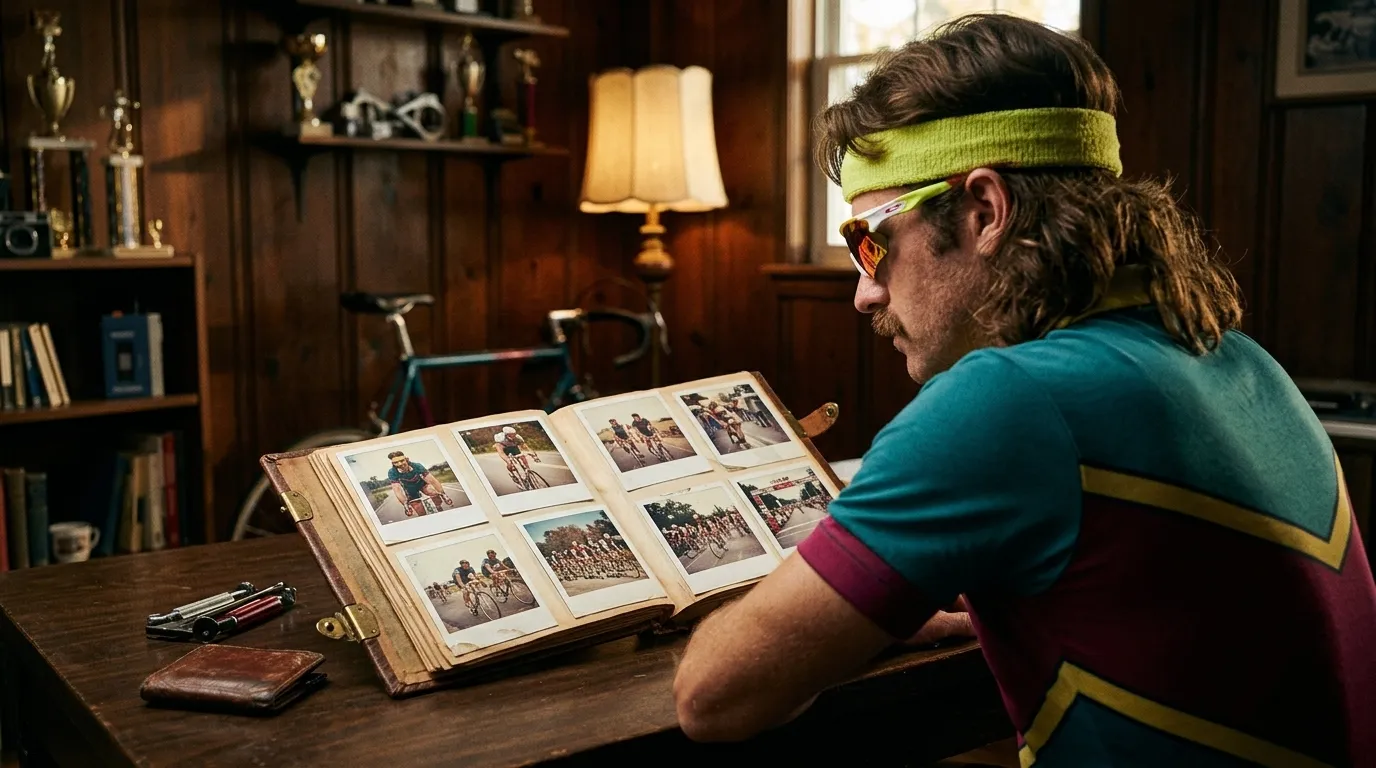
Most rides fade. That’s the truth nobody tells you. You crush a climb, feel like an absolute legend for about forty minutes, then real life swallows it whole. Three weeks later you can’t remember if you actually hit that PR or just imagined it. The best way to remember cycling rides isn’t a leather journal on your nightstand or a color-coded spreadsheet nobody looks at in February. It’s something that captures the whole ride — the data, the day, the feeling — in one place, automatically, before you’ve even toweled off. That’s the idea behind Postcards. And once you see your training this way, you won’t go back.
Your Memory Is Not a Training Tool
I’ve ridden with a lot of cyclists. Serious ones. Riders who could tell you their FTP to three decimal places but couldn’t tell you what they actually did last Thursday. They had the numbers. They just had no story to hang them on.
Back when I was filming Pedal to the Medal, we’d review footage after every session. Not because the camera was fancy — it absolutely was not — but because watching yourself ride teaches you things your legs can’t. You’d see the moment your form fell apart on the third rep. You’d notice the lap where you went out too hard. The footage was memory you could trust.
Data alone doesn’t do that. A power file is a receipt. It tells you what happened but not how it felt. A note that says “Tuesday — hard ride, legs okay” is barely better. Neither one gives you the full picture when you’re trying to understand why last month went sideways, or why this month is suddenly clicking.
What a Postcard Actually Is
Think of it less like a log and more like a postcard from your past self. A snapshot. Location, weather, effort, key numbers. Something that takes thirty seconds to create and gives you everything you need six months later.
This is the cycling training journal alternative that actually gets used. Because the barrier is almost nothing. You’re not writing an essay. You’re capturing a moment. The ride’s already done — the Postcard just makes sure it sticks around.
I’ve looked back at rides from years ago and felt them again. Not just the watts or the heart rate, but the specific Tuesday-morning quality of a climb I did before work, tired, into a headwind, and somehow still feeling good. That context is training information. It tells you something about your body, your consistency, your relationship with the sport. A number doesn’t hold that. A Postcard does.
How to Document Cycling Training Without Making It a Second Job
Here’s the move: connect the data, add one human detail, and you’re done.
When a ride syncs, you’ve already got the structure. Distance, elevation, time, power, heart rate — it’s all there. What turns that into something useful is the one layer on top. Where were you? What were you chasing? How did the back half feel compared to the front? One sentence. Sometimes half a sentence.
Say you did a threshold session on a familiar loop. The numbers look fine but you went out at 270 watts when your target was 255 and paid for it on the second interval. That’s a coaching moment. If you write nothing, you’ll repeat it. If you write “went too hard out of the gate, paid for it lap two,” that’s a pattern you can actually catch. Three Postcards later, you see it happening again. Now it’s something to work on.
Learning how to document cycling training doesn’t mean more admin. It means building a small habit that compounds. The riders who improve fastest aren’t always the ones training hardest. They’re the ones who actually know what they’ve been doing.
The Rides You Think Don’t Count
Here’s something I believe strongly: the easy rides deserve to be remembered too.
Not everything is intervals. Not every session is a breakthrough. Some days you spin for an hour because your legs are cooked and you just needed to move. Those rides matter. They’re part of the picture. And they’re often the ones people forget to log because they feel like they don’t count.
They count. Recovery rides, commutes, long slow Sunday mornings — they’re the connective tissue of a training block. When I look at a rider who’s stagnating, I often find the answer buried in the stuff they didn’t bother to document. The easy days they made too hard. The recovery week that wasn’t really a recovery week. The gaps they didn’t see as gaps.
A Postcard for a 45-minute easy spin takes ten seconds. And it fills in the story.
What Patterns Look Like When You Can Actually See Them
This is where it gets good. One ride is a data point. Thirty rides is a conversation.
Look back at a month of Postcards and you’ll start to see things. Which days consistently produce your best efforts. Which routes crush your confidence. Whether your perceived effort tracks with your actual output or whether you’ve been lying to yourself in one direction or another. How travel affects your legs. What happens to your form the week before a big event.
None of this is obvious in the moment. But stack the Postcards up and the patterns jump out. You didn’t need a coach to notice you’re always flat on Fridays — you needed to be able to see Fridays next to each other.
That’s what good documentation gives you. Not just a record. Perspective.
Every ride has something to say. The 20-minute spin before dinner. The DNF in the rain. The day you felt invincible on a climb you usually dread. These are data points, yes — but they’re also chapters. And the best thing I ever did for my riding, years before any of the tech caught up, was start treating them that way. Don’t let your rides disappear. They’re worth more than that.