Strava Is Lying to You. Not on Purpose.
Dave · June 24, 2026
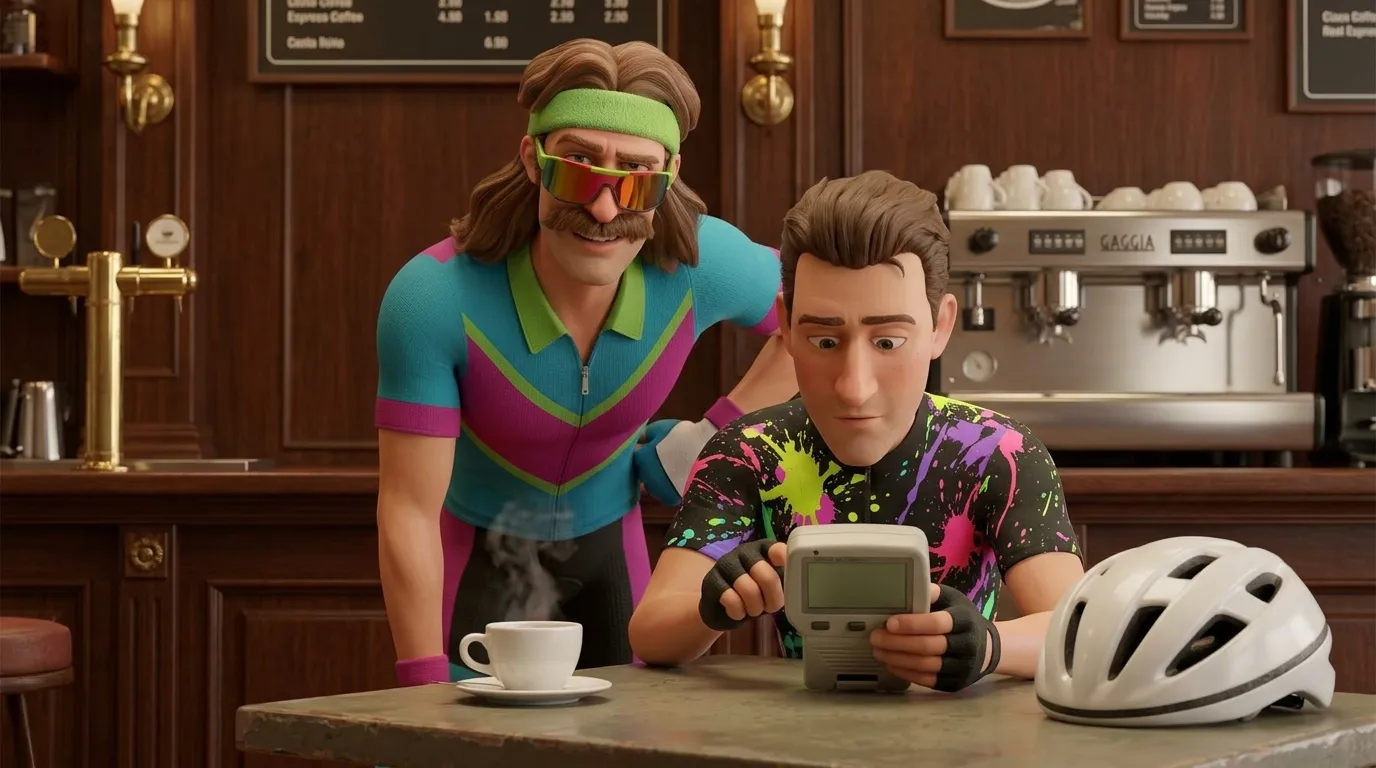
Strava isn’t lying to you the way a bad mechanic lies. It’s not hiding anything. It’s just doing math on data you gave it, and then handing you the answer like it means something specific — when what it actually means is “here’s a number, now you figure out the rest.” That gap between the number and what you should actually do with it? That’s where training goes sideways. And that’s what I’m here for.
What Is Strava Actually Measuring?
The Fitness Score — technically your Chronic Training Load — is a rolling average of your Training Stress Score over 42 days. Higher number, more recent training load. Simple enough. But here’s what it can’t see: whether that load came from 40 days of smart, progressive work or three heroic weeks of overreaching followed by two weeks of doing absolutely nothing because your legs staged a full revolt.
Same score. Completely different athlete. Strava fitness score accuracy has real limits, and the number itself doesn’t know your history.
I coached a rider years back — deep into his VHS-era training, before power meters were even a thing — who would have had an identical Fitness Score to an athlete twice as prepared. He just happened to ride a lot when he felt terrible. Volume was there. Quality was not. Strava would have called them equals.
The Freshness Trap Nobody Talks About
Freshness — or Form, in Strava’s language — is supposed to tell you when you’re ready to perform. It’s your Fitness Score minus your Fatigue Score. When Form goes positive, you’re theoretically fresh. Go race. Go crush the Tuesday group ride. Go show everyone what 40 days of work looks like.
Except.
I’ve seen riders with glowing green Form numbers who couldn’t hold a wheel on a long climb. Why? Because their fatigue calculation doesn’t know they’ve been sleeping four hours a night, dealing with work stress that would make a climber of Alpe d’Huez look like a casual spin, or fighting off something that hasn’t quite become a full cold yet but is absolutely murdering their power output.
The limitations of Strava training data aren’t bugs. They’re just the edges of what a platform can know when it only sees what your GPS device records. Strava sees watts and heart rate. It does not see your face when you clip in on a cold Tuesday morning and immediately know today is not the day.
Why Your Fitness Score Can Look Great During a Plateau
This one gets people. Your Fitness Score keeps climbing even when your actual fitness is standing completely still. As long as you’re accumulating TSS — doing rides that register stress — the number moves up. But TSS doesn’t care if your FTP has budged. It doesn’t know you’ve been riding the same 60-minute loop at the same effort for six weeks because it feels “solid.”
Solid is sometimes fine. Solid is also sometimes the athletic equivalent of treading water while telling yourself you’re swimming laps.
Cycling training data interpretation is the part that requires a human. Or at least a very opinionated coaching voice on your phone. The score goes up. The score goes down. What I need to know is: are your intervals actually getting harder at the same RPE? Are you recovering faster between efforts? Are you handling more volume without the wheel-sucking fatigue of two months ago?
That’s fitness. The number is a shadow of it.
What I Actually Look For
When I look at someone’s data, here’s what I’m not doing: staring at their Fitness Score and deciding whether it’s high enough. Here’s what I am doing: looking at whether their power at threshold has moved over the last six weeks. Looking at how their heart rate responds at the same watts across comparable rides. Looking at where in the week their worst rides are clustering, because that tells me a lot about how they’re stacking their training against their actual life.
A Fitness Score of 65 from a rider who hit three quality VO2 max sessions, nailed their long ride pacing, and slept eight hours is worth a completely different conversation than a 65 from someone who got there by riding every day because they felt guilty if they didn’t.
One of them is building. One of them is close to something I don’t want to see: the kind of flatline performance that turns motivated riders into people who start questioning whether cycling is “for them.”
It’s for them. The data just needs a second pair of eyes.
Strava Is Still Worth Using. Use It Correctly.
I’m not here to tell you to delete the app. I use it. I love a KOM attempt as much as the next guy with a race-legal mustache. But Strava is a record-keeper. A log. A very sophisticated diary that does some math at the end.
It is not a coach. It doesn’t know when you’re lying to it by recording an “easy” ride that your heart rate data says was anything but. It doesn’t know when you’re three weeks from an event and should be backing off instead of chasing your Fitness Score because the number going up feels like progress.
Feeling like progress and being progress are different. That distinction is the whole job.
The best athletes I’ve worked with are the ones who treat their Strava data the way a good navigator treats a map: essential, respected, but never confused with the actual terrain. The map doesn’t know about the headwind on the Zoncolan. It doesn’t know your legs have nothing left at kilometer 12. You have to know that, and you have to know what to do next.
Your Fitness Score isn’t lying. It’s just not the whole story. Come find me when you’re ready for the rest of it.