The Dew Point Is Beating You, Not the Temperature
Dave · October 16, 2026
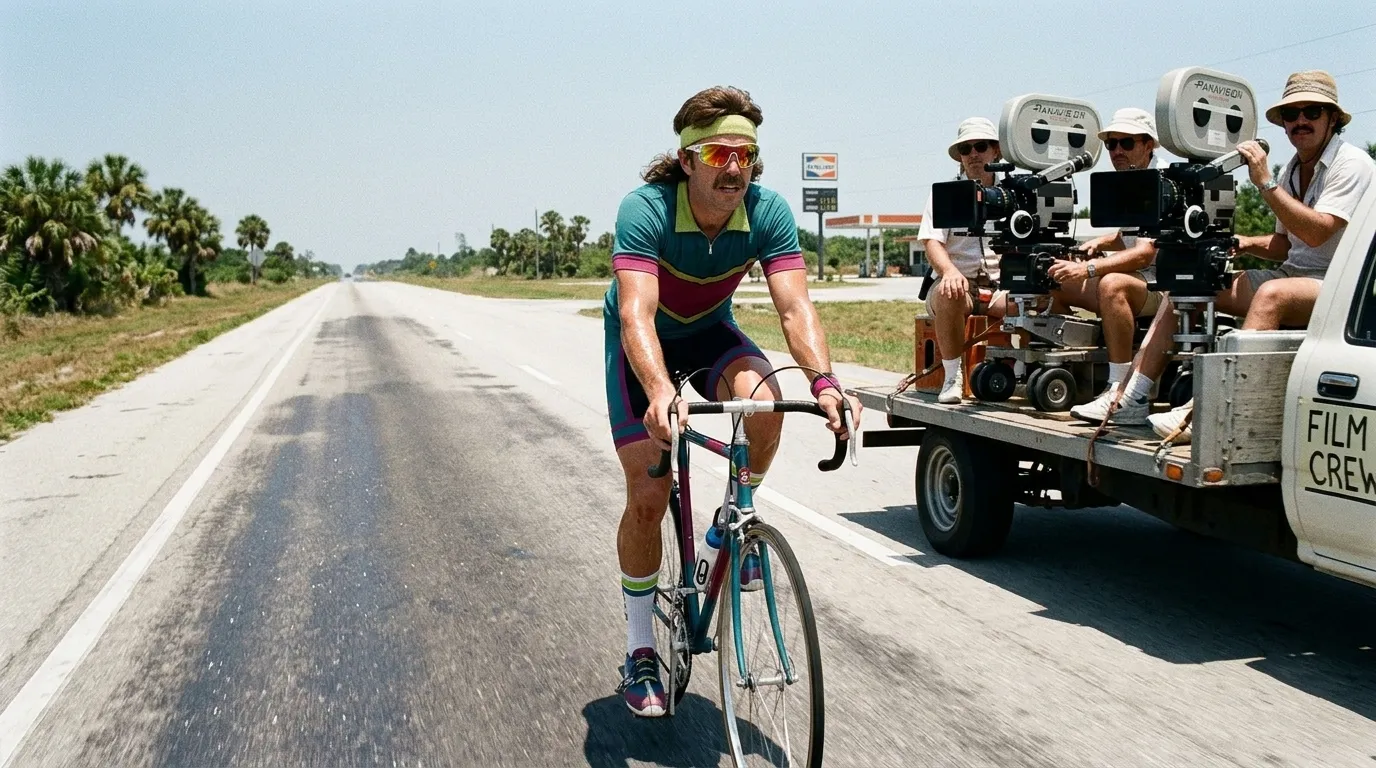
Humidity hurts more than heat because your body cools itself by evaporating sweat, and when the air is already full of water, that sweat just sits on you. The number that tells you how full the air is is the dew point. Ninety degrees with a dew point of 50 is a hot ride. Eighty degrees with a dew point of 72 is a slow cook. Most riders check the temperature, wince a little, and roll out. Almost nobody checks the dew point, and that’s the number that decides how your afternoon goes.
Why is cycling harder in humidity
Your legs are a terrible engine. Most of the energy you burn turns into heat, and only around a fifth of it reaches the pedals. Hold 250 watts and you’re producing something like three to four times that as heat, all of it needing somewhere to go. Moving air helps. Sweat helps far more, but only when it evaporates. Sweat that drips off your nose onto the top tube cools nothing. It’s just water you’ve lost.
We shot the climbing episode of Pedal to the Medal in Tampa in August, which tells you everything about our producer’s grasp of geography. Florida has no climbs. It does have dew points in the mid-seventies. By the third take my jersey weighed about as much as a small dog, and the mustache had filed for a leave of absence. The thermometer said 88. I’d ridden plenty of 88-degree days. That one felt like riding through a warm towel.
Dew point vs temperature for cycling
Relative humidity, the percentage on your weather app, misleads you because it depends on the temperature. A 90% reading at dawn when it’s 60 degrees is a lovely morning. A 50% reading at 95 degrees in the afternoon can be miserable. Dew point skips that problem. It tells you how much water is actually in the air, and that’s what decides whether your sweat can evaporate.
My rough guide goes like this. Under 55, you’ll barely notice it. In the low 60s it starts sending you a bill. Past 70 you pay on every pedal stroke, and past 75 I’d move the hard intervals indoors in front of a big fan, or move them to tomorrow.
Does heat affect heart rate cycling at the same power
It does, and the mechanism is simple once you see it. To shed heat, your body sends more blood to your skin. Meanwhile you’re sweating out fluid, so the volume of blood in circulation shrinks. Your heart has less to work with and more places to send it, so each beat moves less, and it makes up the difference by beating faster.
So a steady 200 watts that sits at 135 bpm on a crisp fall morning can show up at 148 on a sticky July evening, then keep creeping upward for the next hour even though the watts haven’t moved. I already made the case that your threshold moves with heat and hydration, so I won’t rerun that argument. What matters here is that on a humid day, heart rate and power will disagree with each other, and you have to pick one to ride by. Ride the watts and accept the higher heart rate, or ride the heart rate and accept lower watts. If you try to hit both, you’ll lose.
One thing bothers me a lot. The dew point isn’t in your file. Your head unit logs a temperature, usually from a sensor baking on your stem in direct sun, but nothing about the water in the air. When your heart rate runs twelve beats high, I can see the drift and I can see it’s July, and I’m inferring the rest. I don’t love inferring, and I want a better read on this than I’ve got. One line from you like “it was soup out there” is worth more to me here than anything a device sends.
Comparing summer and fall rides on the same segment
Your local climb in October and that same climb in July might share a name on Strava, but they’re two different events. Cool, dry air lets you dump heat almost for free, so all of your cardiac output goes to your legs. On a humid summer evening, a chunk of it goes to your skin just to keep you from cooking. Your fall PR wasn’t luck, and your summer time isn’t evidence that you’re getting slower.
If you want a fair comparison, put a July ride next to another July ride with a similar dew point. Compare power at a given heart rate, and leave the segment time out of it. Pick days where the air was alike, or don’t compare at all.
Did my fitness drop or is it the humidity
Some riders feel humidity far more than others. Heavy sweaters, bigger riders, and anyone who just flew in from somewhere dry all tend to suffer first. If high dew points have always flattened you, that’s probably just how your body handles it, and it doesn’t mean your form has slipped. The cleanest way to answer the question is to find a cool day and check heart rate at matched watts against a cool day from last month. If the numbers line up, your fitness is fine and the air was the problem.
The same goes for the humid group ride where you simply didn’t have it. Maybe the rider who dropped you has spent three weeks training in it. Heat acclimation is real and it’s quick. Ten to fourteen days of regular riding in the heat expands your blood volume and gets you sweating sooner, and that sweat carries less salt. The first bad week of summer is your body learning something, and it usually catches up.
A word on the morning after. A humid ride often leaves you a little dry overnight, which can nudge resting heart rate up and HRV down, and your ring or watch might hand you a gloomy readiness score. I read that as one faint signal. You know whether your legs feel cooked or whether you’re just thirsty, and that counts for more than the score does.
Next time the forecast says 84 and you shrug, look one line further down. If the dew point starts with a seven, go easier on yourself before the ride rather than after it. Drink earlier than seems necessary and ride by watts or by feel, but pick one. And when the ride goes sideways anyway, remember that the air beat you that day. It doesn’t say anything about you.